
From an engineers' utopia to a geopolitical challenge: the transformation of the Morocco–Spain tunnel project
EUROPEAFRICA
Thomas Dos Remedios
11/20/20258 min read
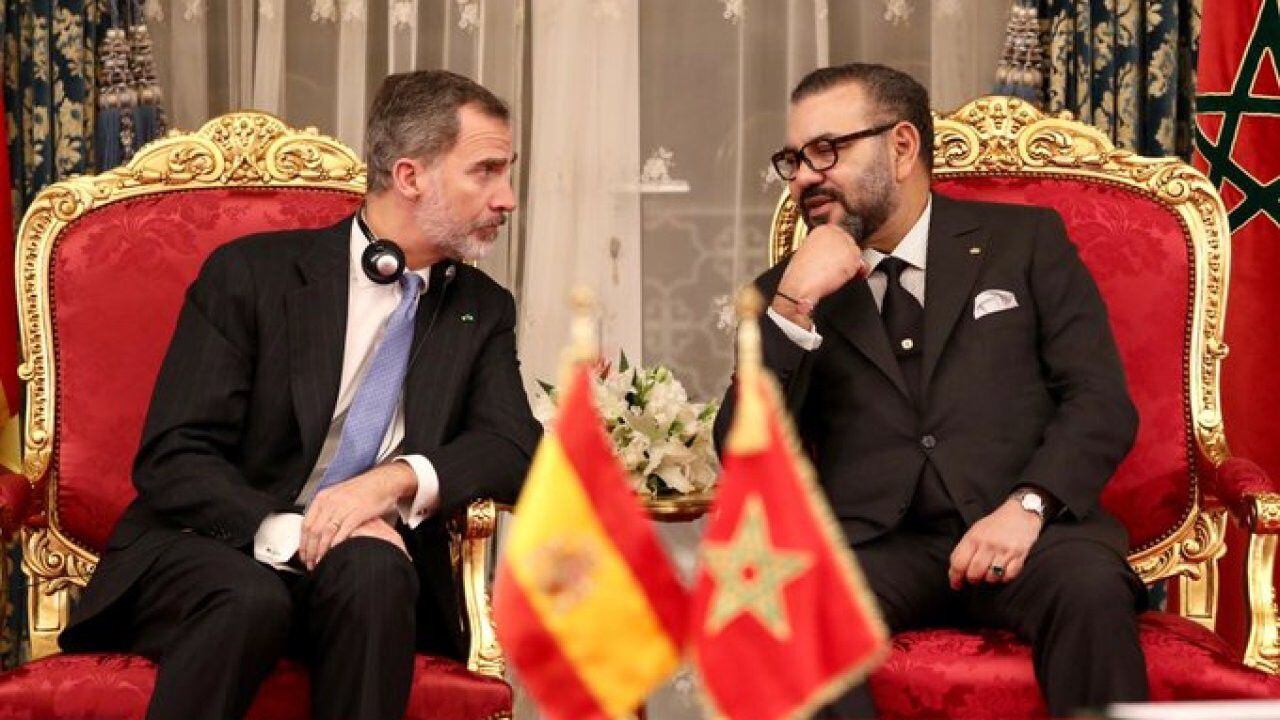
Connecting Africa and Europe via a tunnel under the Strait of Gibraltar: for a long time, this seemed like an engineer's fantasy. Today, the project has been costed, dated, backed up by detailed technical studies and very concrete economic trajectories. It will transform Euro-Mediterranean mobility and Morocco's place in global value chains.
A CENTURY-OLD PROJECT RELAUNCHED FOR 2030-2040
The idea of a fixed link between Spain and Morocco dates back to the end of the 19th century. As early as 1869, engineers were discussing the possibility of digging under the strait; in 1897, a French preliminary project already described a tunnel of about forty kilometres, more than thirty of which would be under the sea, between the vicinity of Tarifa and the bay of Tangier. At the time, the cost was estimated at hundreds of millions of gold francs, a colossal sum that shows that the project was conceived from the outset as a strategic infrastructure on a continental scale.
At the turn of the 1980s, the idea was taken out of the drawer and put into the public policy toolbox. The Spanish and Moroccan governments created two specialised companies responsible for conducting drilling, bathymetric surveys and economic simulations. In a few decades, tens of millions of euros were absorbed by these studies: geology of the strait, route scenarios, traffic projections, cost models. For a long time, the exercise remained academic: knowledge of the subsoil and currents was refined, but no firm political decision was taken, in a context marked by recurring tensions between Rabat and Madrid.
The turning point came in the 2020s. After a long period of silence, the Spanish-Moroccan joint commission met again at the beginning of the decade. It obtained European funding to restart studies and, above all, the Spanish Ministry of Transport commissioned a major tunnel boring machine manufacturer to carry out a comprehensive feasibility study. The study concluded that the tunnel was technically feasible with current technologies, even in an environment described as ‘extremely complex’. The cost of the Spanish section alone is estimated at more than €8.5 billion, with the exploratory tunnel taking six to nine years to build, even before the final tunnels are constructed.
The governments have set themselves a deadline of around 2027 to decide whether or not to launch an initial exploratory tunnel. The most ambitious scenarios suggest that work will begin around 2030, coinciding with the World Cup co-hosted by Morocco, Spain and Portugal, while others point to a commissioning date somewhere between 2035 and 2040. The project therefore currently occupies an intermediate position: no longer quite a dream, not yet a construction site, but already a key topic of Euro-Mediterranean discussions.
A GLOBAL TECHNICAL CHALLENGE
Recent studies point to a route of approximately 42 kilometres between the Tarifa region on the Andalusian side and the Malabata point near Tangier, with nearly 28 kilometres under the sea. The maximum depth would be around 475 metres, almost double that of the Channel Tunnel and much greater than most existing major road or rail tunnels. This takes us from a ‘deep’ structure to a ‘very deep’ structure, with pressures, thermal stresses and safety requirements of a completely different order.
The project involves three parallel tunnels: two main rail tubes and a central service tunnel, connected by cross-passages every few hundred metres, based on the model of the Channel Tunnel. An all-road tunnel was ruled out long ago. Over such a distance, the constraints of ventilation, smoke management and evacuation in the event of fire were considered impossible to control within acceptable safety standards. The rail solution, with passenger trains, freight trains and shuttles carrying cars and lorries on wagons, is considered the only realistic option.
What makes the Strait of Gibraltar unique is the combination of several unfavourable factors: significant depth, rapid variation in the seabed, heterogeneous geological layers and proximity to a seismically active zone at the junction of the African and Eurasian plates. The Camarinal threshold, an underwater ridge where tidal currents and turbulence converge, has been identified as one of the most critical points along the route. This is where hydrostatic pressure is at its highest and where alternating hard and friable rock complicates the design of the voussoirs, the concrete rings that support the tunnel.
To limit uncertainties, the authorities have launched geophysical measurement campaigns and installed seafloor seismometers. The aim is to obtain a detailed model of the behaviour of the subsoil in the event of an earthquake, to model possible deformations and to integrate these parameters into the design phase. Engineers readily compare this potential project to a synthesis of the experience gained on the Channel Tunnel and major Japanese tunnels such as the Seikan Tunnel: significant length, complex marine environment, and significant seismic risk.
The first traffic models in the 2000s already predicted several million passengers and tonnes of freight per year. Some projections suggested around 9 million passengers per year in the early years of operation, with a gradual increase. These figures now need to be updated, but they give an idea of the scale envisaged by the project's promoters: this is not a marginal link, but an axis that is set to play a major role in structuring mobility between Europe and North Africa.
A GEO-ECONOMIC SHIFT FOR THE STRAIT AND FOR TANGER MED
The Strait of Gibraltar is already one of the vital arteries of globalisation. It is estimated that nearly 100,000 ships pass through it each year, an average of nearly 300 per day. This represents a significant fraction of global maritime traffic, with flows ranging from crude oil to giant container ships. Added to this structural traffic is the seasonal movement of ferries, particularly during the summer crossing of the strait, which mobilises millions of travellers from the Maghreb diaspora every year: more than 3 million passengers and more than 10,000 ship rotations have been recorded in recent years.
The first traffic models in the 2000s already predicted several million passengers and tonnes of freight per year. Some projections suggested around 9 million passengers per year by
Against this backdrop, the Tangier Med complex has established itself in record time. Inaugurated in the late 2000s, it has grown from a modest volume to more than 8 million TEU (twenty-foot equivalent units) in just over a decade, then crossed the threshold of 10 million TEU per year. In terms of tonnage, it easily exceeds 130 million tonnes of goods per year, placing it at the top of African ports and among the leading container ports in the Mediterranean. Opposite, the port of Algeciras, long dominant, is seeing its relative position shaken, with about half the container traffic of its Moroccan neighbour.
For Morocco, a tunnel under the strait would be the missing piece of a larger puzzle: the Tangier Med port, already connected to the hinterland by motorway and the Tangier-Kenitra high-speed rail line, would be joined by a fixed link to the Iberian Peninsula and, beyond that, to the European rail network. Transit times for sensitive flows – cars, spare parts, fresh produce – would be shortened and, above all, made more predictable. In a world where value chains operate on a just-in-time basis, this predictability is sometimes worth as much as a few hours' time saved.
For Spain, the challenge is to consolidate its role as the European Union's energy, logistics and digital hub. The south of the peninsula is already a landing point for gas pipelines from Algeria and Morocco, and a crossing point for numerous submarine telecommunications cables. In addition to railways, the tunnel scenarios also envisage the possible integration of pipelines and electrical and optical cables, transforming the structure into a multifunctional corridor. Andalusia and the Algeciras area would gain a stronger role as a transhipment and processing platform.
However, several regional economists highlight the hierarchical effects that such infrastructure could produce. By making Tangier-Algeciras the main rail, maritime and energy hub between North Africa and Europe, other routes, such as the Tunisia-Italy or Egypt-Greece links, could potentially be marginalised. Morocco would thus see its position as a privileged gateway to the African continent confirmed, which would strengthen its assets but could also fuel regional rivalries.
Finally, the tunnel is part of the European Union's broader strategies. It has its place in the trans-European transport network maps and in discussions about a Europe that is more connected to its Mediterranean environment. Some officials present it as a flagship project for a policy of major corridors linking ports, industrial areas, rail and energy hubs, in response to major Chinese and American initiatives.
FINANCING, ENVIRONMENT, MIGRATION : A PROJECT STILL FRAUGHT WITH UNCERTAINTY
While the technical feasibility is now better supported than before, there are still considerable grey areas. The first concerns financing. Current estimates put the cost of the entire project at several billion euros, including at least 8.5 billion for the Spanish side in its most ambitious version. Previous projects call for caution: the Channel Tunnel cost more than twice the initial estimates, despite a very favourable context of transport liberalisation and low interest rates. The financing package will probably include a combination of public subsidies, European funds, loans from international institutions and possible public-private partnerships, but no one can say today which combination will prevail.
Experts working on the project point out that the central question is not only ‘how much will it cost’, but ‘who will take the risk’. A project of this magnitude commits states for several decades. While the purely financial return is uncertain, the benefits lie elsewhere: in terms of territorial integration, security of supply and geopolitical positioning. Some officials argue that such a project should be viewed as a strategic investment, like a large dam or a high-speed rail network, rather than a commercial venture.
The second area of controversy is environmental. On paper, a rail tunnel offers a mode of transport that emits less CO₂ than aeroplanes or certain forms of maritime traffic, particularly for short- and medium-distance passenger and freight transport. But the construction of such a structure requires massive quantities of concrete, steel and energy, not to mention the extraction and management of millions of cubic metres of spoil. In a fragile marine environment, crossed by strong currents and frequented by species sensitive to noise and vibrations, the potential impacts of a ten- to fifteen-year construction project are far from insignificant.
Finally, migration has a significant impact on perceptions. For decades, the Strait of Gibraltar has been one of the symbols of the inequalities in mobility between the two shores: European tourists and retirees on one side, and asylum seekers risking their lives on makeshift boats on the other. Some European politicians fear that a fixed link would be seen as an additional route for irregular migration. Others argue that a highly secure and controlled rail tunnel would not be a ‘clandestine highway’ but could, on the contrary, support a more structured policy of legal mobility for seasonal workers, students, binational families, etc.
Beyond these debates, the Strait of Gibraltar tunnel is already serving as a test of Euro-African cooperation. It forces us to clarify issues that are often left vague: what kind of economic integration do we really want between the European Union and the Maghreb? To what extent are we willing to share the financial, technical and environmental risks in order to strengthen this relationship? Should Morocco be thought of primarily as a logistics corridor between Africa and Europe, or as an autonomous development hub that uses this corridor to increase its own room for manoeuvre?
Today, the project is suspended between three statuses: a century-old dream, a technically mature project, and a geopolitical symbol. The coming years, and in particular the decisions that will be taken around 2027, will determine whether it will remain an engineering myth, a political communication tool, or whether it will actually become what its promoters claim it will be: a new physical gateway between two continents that have so much in common and yet remain separated by so many things.
Thomas Dos Remedios, for SPECTIO
The statements made are solely those of their authors and do not reflect the position of the Think Tank Spectio.